
Table of Contents
- Understanding How Airport Surge Pricing Works
- Step-by-Step: How to Check Fares Before Requesting a Ride
- How to Avoid Uber Surge Pricing at Airport Pickups
- Scheduled Uber Airport Pickup: Booking in Advance
- Airport Transportation Cost Comparison: Rideshare vs. Alternatives
- Common Mistakes to Avoid When Fighting Surge Pricing
- Frequently Asked Questions
Last Updated: October 12, 2026
Understanding How Airport Surge Pricing Works
Surge pricing at airports is a real challenge for travelers. When demand spikes and driver supply can’t keep up, fares jump significantly. Understanding what causes this helps you plan better and avoid surge pricing airport rides.
At J.L. Jones Limousines LLC, we work with travelers daily who want reliable airport transportation without surprise costs. The core issue is simple: airports create concentrated demand at specific times. Everyone lands at once. Everyone needs a ride at once. That mismatch between demand and available drivers is what triggers surge pricing.
Why demand spikes at airports
Peak arrival times create predictable demand surges. Morning flights land in clusters. Evening arrivals bunch together. Holiday travel multiplies the effect. Weather delays create sudden spikes when multiple flights land simultaneously.
Airports concentrate travelers in ways regular city pickups don’t. You’re not spread across a metro area over hours. You’re concentrated in one location over minutes. That’s the demand trigger.
How driver supply affects your fare
Drivers respond to surge pricing by heading to airports during peak times. But they can’t arrive instantly. The lag between demand and driver arrival is when prices spike highest.
Airport regulations also limit driver supply. Many airports restrict where rideshare drivers can wait. Some require designated pickup zones. Others limit how many vehicles can queue at once.
During off-peak hours, driver supply exceeds demand. Fares drop. During peak hours, demand exceeds available drivers. Fares climb.
Step-by-Step: How to Check Fares Before Requesting a Ride
Checking fares before you commit is your first defense against surge pricing, but most advice stops at “refresh the app.” A repeatable process is what actually helps you decide whether to wait, walk, or book. Here is a method you can run in about two minutes.
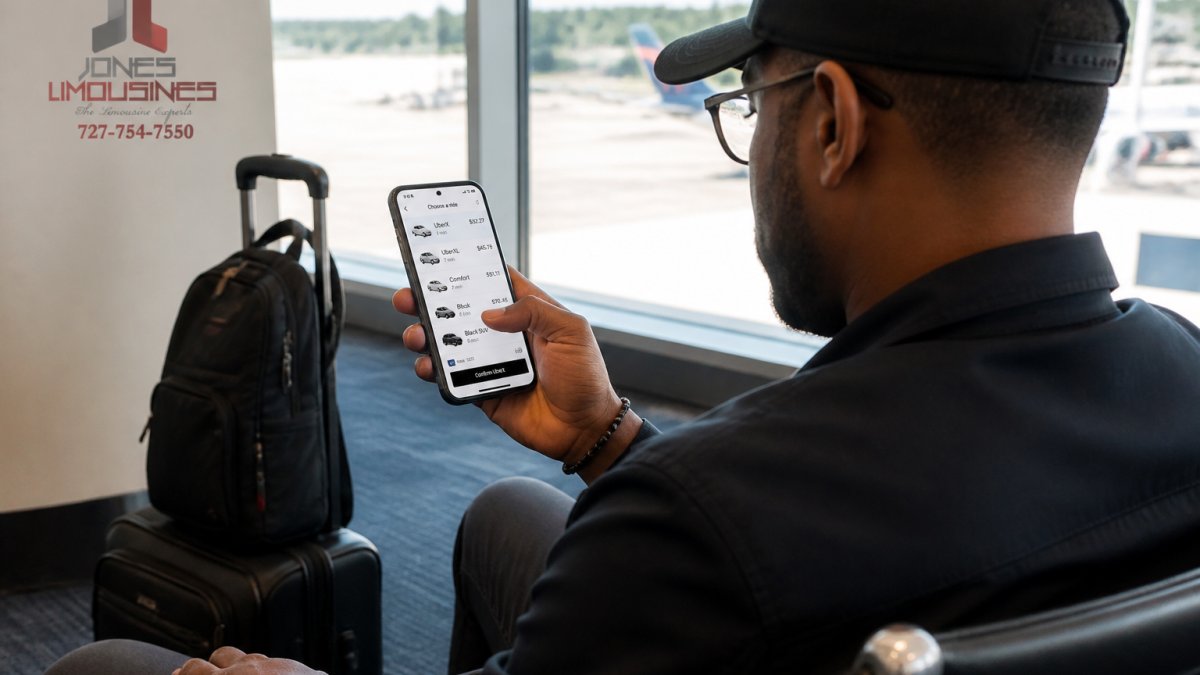
Step 1: Establish a baseline fare
Before you land, or the night before, pull a fare estimate for your route during an off-peak window. That number is your baseline. It tells you what the ride costs when demand is normal, so you can judge whether the fare you see at pickup is actually inflated.
A common pattern is for travelers to have no reference point, so any number looks reasonable. Having a baseline removes that guesswork.
Step 2: Refresh the estimate two or three times
Open the app and request an estimate, then back out and repeat. Wait 30-60 seconds between checks. Fares update constantly, especially at airports during busy periods. If the number holds steady, you are likely outside a surge window. If it climbs between refreshes, you are in one.
Note the exact fare shown and screenshot it if the app allows. Some apps display a surge multiplier (1.5x, 2x, 2.5x); others hide the multiplier but show the total. Either way, you see the real cost before committing.
Step 3: Compare pickup zones
Many airports have more than one designated rideshare pickup area, terminal zones, offsite lots, remote lots reached by shuttle, and street-level curbs. Fares can differ meaningfully between them because each zone has its own demand and supply balance.
Pull an estimate from each zone you can realistically reach. A terminal pickup might show a 2x multiplier while a lot five minutes away shows 1.2x or none at all. The gap is the whole point of this step.
Step 4: Decide, wait, walk, or book
Once you have the baseline, the current fare, and the zone comparison, the decision becomes simple:
- Wait if the fare is near your baseline and you have time to spare.
- Walk if a nearby zone shows a materially lower fare and you can manage the distance with your luggage.
- Book if the fare is high and you have a fixed-rate alternative or a pre-booked transfer available.
Step 5: Re-check before you confirm
Even after you decide, re-check the estimate one last time before tapping confirm. Fares can shift in the minutes it takes to walk to a pickup zone. If the number jumped, go back to Step 3 and compare zones again.
This process does not guarantee you will avoid surge pricing airport situations. It does guarantee you will know what you are paying and why, which is the difference between a deliberate choice and an expensive default.
How to Avoid Uber Surge Pricing at Airport Pickups
Specific tactics work for reducing surge pricing at airports. These are practical steps you can take right now.
Timing your request during off-peak hours
Surge pricing follows predictable patterns. Early morning (before 6 AM) and late evening (after 9 PM) typically have lower demand and better fares.
Mid-morning (9 AM to noon) sees moderate demand. Early afternoon (1 PM to 4 PM) is often lighter.
If your flight flexibility allows, arriving during lower-demand windows reduces your surge exposure. A 6 AM arrival typically has lower fares than a 5 PM arrival.
This tactic only works if you control your flight time. Most travelers don’t. But if you’re booking flights, this is worth considering.
Walking to a different pickup location
Walking 5-10 minutes from the terminal to a nearby rideshare zone can cut surge pricing dramatically. The distance reduction from peak demand areas lowers your fare estimate.
Some airports make this easy. Others make it difficult due to layout or safety concerns. Check your specific airport’s geography before you arrive.
The time investment (5-10 minutes walking) versus the fare savings (often 20-40% during surge) is usually worth it for leisure travelers. Business travelers might skip this given time value.
Scheduled Uber Airport Pickup: Booking in Advance
Pre-booking your ride is one of the most effective ways to avoid surge pricing for airport pickups.
How scheduled rides lock in fares
When you schedule a ride hours or days in advance, the app calculates a fare estimate based on non-surge conditions. That fare is locked in. You pay that amount regardless of whether surge pricing kicks in later.
This is powerful. You eliminate surge pricing uncertainty entirely. You know exactly what you’ll pay before you even land.
Booking 24 hours ahead for better rates
Most apps let you schedule rides 24 hours in advance. Some allow up to 7 days ahead. Booking closer to 24 hours gives you a more accurate fare estimate than booking a week early.
Scheduled rides typically cost slightly more than off-peak regular requests. But they cost significantly less than peak-time surge requests. The premium for certainty is usually 10-20%. Surge pricing during peak times can be 50-200% or higher.
The math is simple: a $30 scheduled ride beats a $50-75 surge ride every time.
Airport Transportation Cost Comparison: Rideshare vs. Alternatives
Understanding your true transportation cost means comparing all options on the same terms, not just the sticker price of a rideshare. The table below outlines what each mode typically includes, so you can weigh total cost against convenience.
What each mode actually costs
|
Mode |
Pricing structure |
Surge exposure |
Typical extras |
Best for |
|---|---|---|---|---|
|
Rideshare |
Metered, varies by demand |
High during peak |
Airport pickup fees, tolls |
Solo travelers, short trips |
|
Taxi |
Metered or flat zone rate |
Low to none |
Airport fees, tolls |
Travelers who want a metered option without app surge |
|
Public transit |
Fixed fare |
None |
Time, limited luggage space |
Budget travelers, light packing |
|
Shared shuttle |
Per-seat fixed rate |
None |
Multiple stops, longer travel time |
Budget travelers, solo |
|
Pre-booked transfer |
Flat rate quoted upfront |
None |
None beyond quoted rate |
Groups, business travelers, families |
Rideshare during surge
A rideshare fare during surge can run well above its off-peak baseline. The base fare varies by airport and distance, and the multiplier stacks on top. Add airport pickup fees and any tolls on the route, and the total can climb quickly. The trade-off is convenience: door-to-door service with no advance planning.
Taxi service
Taxis at most airports operate on a meter or a flat zone rate set by the airport authority. That structure limits surge exposure, though airport fees and tolls still apply. Availability can be inconsistent during peak arrival windows, and not every airport has a robust taxi queue.
Public transit
Public transit is the cheapest option by far when it connects your airport to your destination. The trade-offs are time and luggage: routes may require transfers, and space for large bags is limited. For travelers with light luggage and flexible schedules, it is often the best value.
Shared shuttle
Shared shuttles charge a per-seat fixed rate, so there is no surge pricing. They make multiple stops, which extends travel time, and reliability varies by operator. For budget-conscious solo travelers, the predictable cost is the main appeal.
Pre-booked and fixed-rate transfers
Pre-booked transfers quote a flat rate upfront, so the price you see is the price you pay regardless of demand. For groups, the per-person cost often drops below a surged rideshare split several ways. The trade-off is that you commit in advance, and cancellation terms vary by provider, read them before booking.
How to run your own comparison
Before you travel, price out at least three modes for your specific route: rideshare (off-peak baseline), a fixed-rate option, and public transit if it is available. Add any airport fees and tolls to each. Then compare the totals against how much your time and convenience are worth on that trip. That comparison, not a single app estimate, is what tells you whether you are actually avoiding surge pricing or just paying it in a different form.
Common Mistakes to Avoid When Fighting Surge Pricing
Several mistakes make surge pricing worse. Knowing these helps you avoid them.
Don’t request immediately upon landing. Wait 10-15 minutes. Let the initial wave of arrivals thin out.
Don’t assume the first fare estimate is your only option. Compare pickup locations. Check different times.
Don’t ignore alternative transportation entirely.
Don’t book a round-trip with surge pricing baked into both directions. Book each leg separately if possible.
Don’t rely solely on scheduling if your flight might be delayed.
Navigating airport transportation involves real trade-offs.
J.L. Jones Limousines LLC provides fixed-rate airport transfers throughout the Tampa Bay area, eliminating surge pricing uncertainty entirely. With professional drivers and reliable service to Tampa International and Clearwater-St Pete airports, we offer an affordable alternative to rideshare surge pricing. GET QUOTE NOW to see how fixed-rate airport transfers compare to your typical rideshare costs.
Frequently Asked Questions
How can I avoid surge pricing on an airport ride?
Check fares before requesting by refreshing the app multiple times, consider walking to a different pickup location outside the main terminal zone, request a ride during off-peak hours if your schedule allows, or book a scheduled ride 24 hours in advance to lock in a flat rate. You can also compare total costs across transportation modes like airport shuttles or pre-booked car services, which often charge fixed rates regardless of demand.
Is it cheaper to schedule an Uber in advance for airport pickup?
Yes. Scheduled rides typically lock in fares at the time of booking rather than using dynamic pricing based on real-time demand. Booking 24 hours ahead often provides better rates than requesting a ride at the airport during peak travel times. However, check your app’s scheduled ride option to confirm pricing before committing, as availability and rates vary by location and time.
Are airport shuttle services less affected by surge pricing?
Airport shuttle services and fixed-rate airport transfers operate on flat-rate pricing models, so they avoid surge pricing entirely. However, they may have longer wait times and less flexibility than rideshare. Compare the total cost, travel time, and convenience against rideshare options to determine which works best for your trip and budget.
What time are rideshare prices highest at the airport?
Peak travel times—early mornings (6-9 AM), evenings (4-7 PM), and holiday periods—see the highest surge pricing because many flights arrive and depart simultaneously while driver supply cannot keep pace. Waiting 15-30 minutes after landing or requesting a pickup from a less busy location can significantly reduce fares during these periods.